

Why Spray Foam Insulation?
Spray foam is a building decision, not just a product choice. The best answer depends on how heat, air and moisture move through the property.
Insulation is part of a bigger system.
Your roof, walls, ceilings, doors, windows, mechanical systems and insulation all work together as the boundary between indoor conditions and the weather outside.
Traditional insulation primarily slows heat transfer. Spray foam can also help limit unwanted air movement where it is installed as part of an appropriate assembly.
That air-sealing behavior is why spray foam insulation often comes up for attic and roof deck insulation, metal buildings and other spaces with irregular gaps or transitions.

Spray foam is different, not magic.
Spray Foam
Expands during installation, can insulate and help air seal, and requires professional application.
Fiberglass
Widely used in batts or blown form, mainly slows heat transfer, and may need separate air sealing.
Cellulose
Common in attic and retrofit work, can fill irregular spaces, and still depends on the assembly for air control.
The right choice depends on the building, the project goal and the details you can actually inspect.
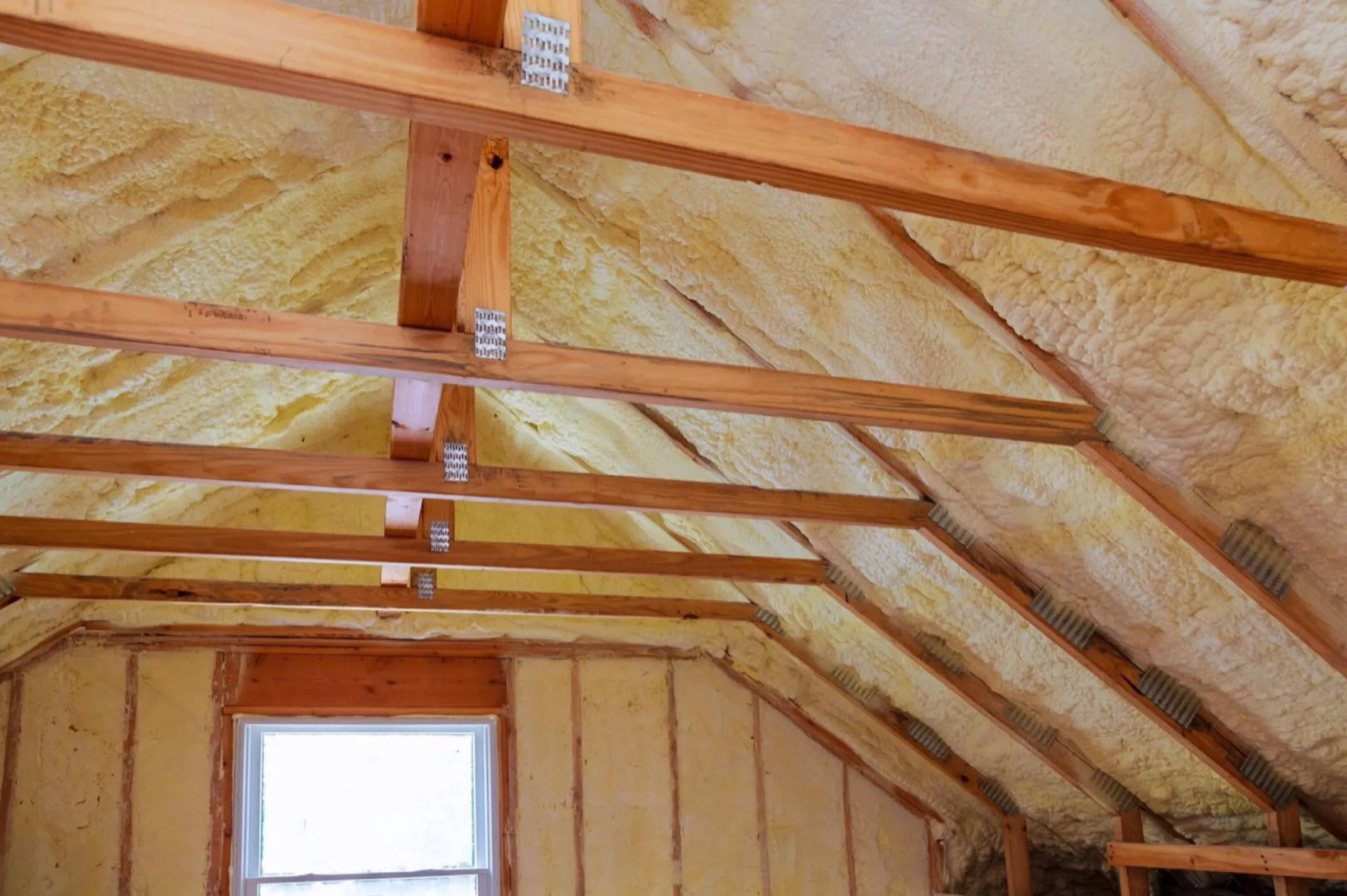
Two foam families, different behavior.
Open-cell foam is lower density and expands significantly. It is often considered for certain interior assemblies where its properties fit the design.
Closed-cell foam is denser and has different vapor and rigidity characteristics. It is often discussed for metal buildings and areas where those properties matter.
Neither is universally better. The service pages for residential spray foam and commercial spray foam explain how the application changes the question.
Questions people ask before choosing foam
What does spray foam do differently?
Spray foam expands during installation, so it can insulate and help reduce air movement where it is applied correctly.
Is open-cell or closed-cell better?
Neither is universally better. The answer depends on the assembly, moisture strategy, desired thickness and project goal.
Does spray foam replace ventilation planning?
No. Ventilation, moisture and building design still matter. Foam is one part of the assembly.
When might spray foam not be the right answer?
If access, budget, moisture conditions, code requirements or the existing assembly point another direction, a different insulation approach may make more sense.
You do not have to diagnose the building alone.
Describe the property and what you want to improve. The next step should come from the assembly, not a guess.